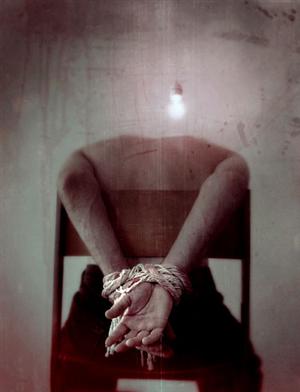
A person’s pain cannot be fully comprehended or explained simply through words. The words have to posses the ability to invoke feeling in the listener. However, even though the listener may hear the words being expressed, they are not able to fully comprehend the meaning behind them. Granted there are doctors trained in fields of science to help people cope with their pain; but the amount of physical, emotional, and psychological pain endured is far too great. These doctors sift through the victim’s mind and pick out the things he or she thinks is important in helping the victim cope. Elaine Scarry, explains that “physicians do not trust the human voice…they in effect perceive the voice of the patient as an ‘unreliable narrator’ of bodily events, a voice which must be bypassed as quickly as possible so that they can get around and behind it to the physical events themselves”(The Body in Pain The Making and Unmaking of the World). In other words, physicians often request a verbal explanation from the patient, but only does so to allow the patient to feel they have given an accurate explanation of there pain. However, the physician accepts the explanation and now purges further to uncover the root of the victim’s pain.
The initial reaction to bondage and torture is fear. In the case of modern day slavery, fear of torture and the tormentor is what fuels the pain. There is fear of the unknown, which is a natural human response to discomfort. By being enslaved, slaves are victims of torture as well as psychologically disturbed. Once the tormentor or slaveholder invokes that fear, psychologically, the victim is not able to escape. They may physically become free, but will always be held captive in their minds. Doctors such as Dr. Vaknin, the author of Malignant Self Love Narcissism Revisited, states: “Torture robs the victim of the most basic modes of relating to reality…Torture has no cut-off date. The sounds, the voices, the smells, the sensations reverberate long after the episode has ended”(The Psychology of Torture). Torture prolongs fear and causes it to be ever-present. With victims of slavery, the torture is so extreme it constantly haunts the slave.
Repression is a tactic that many victims of slavery use to try and remain sane. The act of repression is burying a memory deep into one’s brain in an effort to forget. Although this is true, there are things that will trigger the memory and send the person back in to that former state of fear. The memory that person has will never be erased and has had far to great of an impact to be forgotten. For instance, in the case of the brothel mother Katarina ("DMS"), she was once involved in sex work but later took part in running the brothel. This exemplifies the toll that being a sex worker took on her. She believed that " the brothel is simply a second home where young women come to make money" (DMS).
Even though victims struggle daily with fear, there are outlets to express this pain other than language. Because pain and fear can’t justly be vocalized, victims have the option of expressing their pain through artwork, theatre, music and drama. By channeling these negative feelings into something positive, they can even create pieces of work that inspire others. This is a form of positive reinforcement that allows for an action to be repeated thus giving the victim a way to overcome what happened to them. As with James Kofi Annan in “DMS”, he fueled his “anger” of being enslaved into education. He was determined to become the best pupil and rose to the top of his class. However, even after such an accomplishment, he was still psychologically tormented by the events of being enslaved. This is a small step, but he stated that by helping others, he is slowly helping himself along the road of rehabilitation. Other slaves who find themselves free and the verge of recovery can take on this challenge of bettering themselves through helping others or through expressive forms of art.
-Raney Antoine & Jessiona Bryant


